+86 15968093247


Global buyers are rethinking Striped Fabric as fashion demand meets stricter sourcing expectations. Stripes now appear across shirts, upholstery, bedding, uniforms, and outdoor products. Yet the category remains poorly measured. Major textile reports rarely separate striped fabric from broader woven or knitted fabric segments.
The Textile Exchange Materials Market Report 2024 recorded global fiber production at approximately 124 million tonnes in 2023. It projects production could reach 160 million tonnes by 2030. That growth increases pressure on mills to document fiber origin, recycled content, dyeing processes, and water use. Buyers need more than attractive color cards.
Fashion historian James Laver famously observed, “The first man who dared to wear stripes was a brave man.” His remark highlights stripes’ unusual cultural history. They can signal leisure, workwear, authority, or rebellion. Their meaning changes across markets.
This guide examines the leading striped fabric types for 2026. It compares cotton poplin, linen blends, recycled polyester, jersey, canvas, and jacquard constructions. Practical details matter. A narrow navy stripe may hide sewing misalignment better than a wide contrast stripe. Uneven tension can still distort the repeat after washing.
Reports from Textile Exchange and the International Textile Manufacturers Federation support the wider market context. However, they do not provide a dedicated global striped-fabric forecast. That limitation deserves attention. Product-level decisions still require mill audits, laboratory testing, shade approvals, and wash trials.
The strongest choice is rarely the cheapest roll. It is the fabric that performs consistently from sampling to shipment.
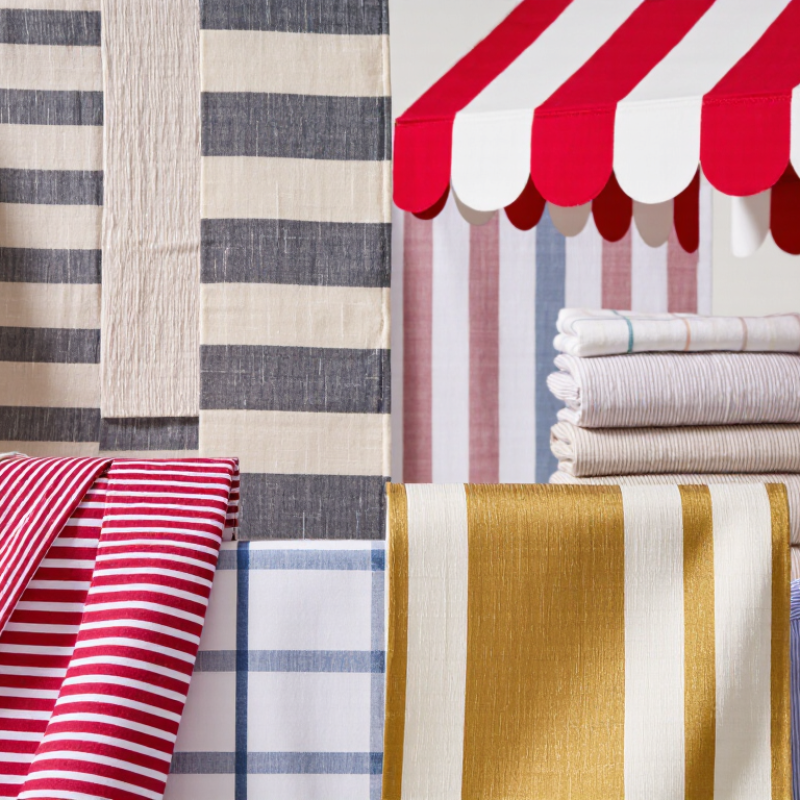
Striped fabric is a textile with repeated lines that differ in color, texture, width, or direction. The stripes may be woven, knitted, printed, yarn-dyed, or created through surface finishing. Each method changes appearance, durability, and cost.
A yarn-dyed stripe usually holds its color better during washing. Printed stripes can offer sharper details and flexible design options. They may fade sooner under strong light.
Classification begins with stripe direction. Vertical stripes can visually lengthen garments, while horizontal stripes create a wider impression. Diagonal stripes add movement and often require careful cutting.
Fabric is also classified by stripe scale, including pinstripes, pencil stripes, awning stripes, and broad bands. Width matters. Small measurement errors can make a finished panel look uneven.
Construction provides another useful category. Woven striped fabrics often feel stable and structured. Knitted versions stretch more and suit casual clothing. Buyers should check fiber content, fabric weight, repeat size, colorfastness, and shrinkage before approval.
I have seen samples where the stripe looked balanced on the roll but shifted after washing. That detail is easy to miss. Classification is helpful, but not perfectly clean. One supplier may describe a fabric by its weave, while another names it by its visual pattern. A physical sample and test report remain more reliable than a catalog description.
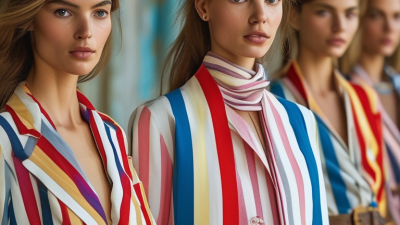
Global buyers can choose from several striped fabric types in 2026. Yarn-dyed cotton remains suitable for shirts, bedding, and casual uniforms. Its stripes stay visible after repeated washing. Printed cotton offers sharper patterns and lower sampling costs. However, uneven color penetration may appear on darker grounds. Linen and linen-blend stripes provide a dry, textured handle for summer apparel and home textiles. They wrinkle easily. That remains a design feature, but not every market accepts it.
Jersey stripe fabrics support T-shirts, children’s wear, and lightweight dresses. Cotton jersey feels breathable, while polyester jersey dries faster during active use. Seersucker creates raised stripes through controlled tension differences. It improves airflow and reduces fabric contact with the skin. Dobby and jacquard stripes add structure through woven texture rather than surface printing. These options often suit premium shirts, upholstery, and decorative panels.
Material selection also needs measurable evidence. Textile Exchange’s Materials Market Report 2024 records global fiber production at about 124 million tonnes in 2023. Polyester represented roughly 57%, while cotton accounted for about 19%. Recycled polyester can reduce reliance on virgin inputs, but buyers should verify recycled content and chain-of-custody documents. The report projects global fiber production could reach 160 million tonnes by 2030. That forecast makes durability more important. In practice, buyers should test shrinkage, colorfastness, pilling, and stripe alignment before approval. Small errors become obvious across wide fabric rolls. Sampling alone is not enough.
2026 Top Striped Fabric Types for Global Buyers
Fiber choice shapes comfort, durability, price, and stripe clarity. Combed cotton feels soft and suits shirts, bedding, and casual apparel. Polyester resists wrinkles and dries quickly, making it useful for uniforms and activewear. Linen offers airflow and natural texture, but it can crease easily. Cotton-polyester blends balance softness with performance, although the blend may dye unevenly. That trade-off needs testing.
Weave construction changes how stripes appear and perform. Plain weave creates sharp, stable lines for lightweight fabrics. Twill adds diagonal texture and stronger abrasion resistance. Knitted fabrics stretch comfortably, but stripes can distort after washing. Yarn-dyed stripes usually hold their pattern well because colored yarns form the design before weaving. Piece dyeing can reduce costs, yet stripe edges may look less precise. Lab dips and wash tests remain essential. Color can surprise you.
Tips: Check fiber percentages, fabric weight, width, shrinkage, and colorfastness before ordering. Request a physical sample, not only digital images. Inspect stripe alignment under natural light. Test the fabric after repeated washing and drying. Small errors become expensive at production scale. A supplier’s technical sheet helps, but it should never replace independent inspection.
Global buyers often compare striped fabrics by appearance first, but performance decides the real value. Yarn-dyed cotton usually gives clear stripes and a soft hand feel. It suits shirts, bedding, and light interiors. Polyester stripes resist wrinkles and dry quickly. Linen blends offer natural texture, although they may crease and shrink more easily. Dobby and jacquard structures add depth, but their higher production complexity can raise costs.
Quality checks should include fabric weight, stripe alignment, colorfastness, shrinkage, pilling, and abrasion resistance. Request a sample from the actual production batch. Test before ordering. A fabric can look excellent under showroom lighting and still fail after washing. I have seen minor stripe distortion become obvious across a large curtain panel. That problem was not visible on a small swatch. Numbers can mislead.
Cost comparison should include yarn quality, finishing, minimum order quantity, packaging, freight, duties, and expected replacement rates. A cheaper polyester fabric may reduce purchasing cost but feel unsuitable for premium apparel. A cotton fabric with stronger colorfastness may cost more but perform better over repeated washing. Ask for test reports, production tolerances, and clear inspection terms. Suppliers sometimes provide broad claims instead of useful measurements. That deserves caution. I still believe buyers should compare complete landed cost, not only the quoted meter price. Even experienced teams can overlook waste from matching stripes during cutting.
| Striped Fabric Type | Typical Fiber Composition | Common Construction | Typical Weight | Best-Fit Applications | Quality Indicators | Performance Profile | Colorfastness Expectation | Indicative Cost Level | Buyer Considerations |
|---|---|---|---|---|---|---|---|---|---|
| Cotton Yarn-Dyed Stripe | 100% cotton | Plain weave, twill, or dobby; stripes created with dyed yarns | 110–220 g/m² | Shirts, dresses, casual tops, pajamas, children’s clothing | Even stripe repeat, clean selvage, low slub variation, stable width | Soft hand feel, breathable, absorbent, comfortable in warm climates; moderate abrasion resistance | Good to very good when reactive dyes are used; verify washing and rubbing results | Medium | Check shrinkage after washing, skew, pilling tendency, and yarn-dye consistency between lots |
| Cotton-Polyester Stripe | 60–65% cotton / 35–40% polyester | Plain weave, poplin, or twill; yarn-dyed or piece-dyed | 100–210 g/m² | Uniform shirts, workwear, schoolwear, hospitality apparel | Balanced fiber blend, uniform stripe alignment, controlled bow and skew | Better dimensional stability and wrinkle resistance than 100% cotton; moderate breathability | Good to very good, depending on dye system and polyester component | Low to medium | Confirm fiber ratio, formaldehyde compliance, moisture management, and color migration risk |
| Linen-Blend Stripe | Typically 45–55% linen / 45–55% cotton or viscose | Plain weave, slub weave, or basket weave | 130–260 g/m² | Resortwear, summer shirts, trousers, skirts, home textiles | Natural slub character, consistent stripe spacing, controlled fabric relaxation | Highly breathable and cool; naturally textured; wrinkles easily and may require pressing | Good, with potential shade variation from natural fibers | Medium to high | Evaluate fiber declaration, wash shrinkage, surface hairiness, and acceptable natural irregularities |
| Viscose Stripe | 100% viscose or viscose-rich blend | Plain weave, satin, crepe, or twill | 90–180 g/m² | Blouses, flowing dresses, skirts, scarves, fashion linings | Smooth surface, clear stripe definition, low barre, controlled drape | Soft, cool, and fluid drape; lower wet strength and greater dimensional sensitivity than polyester | Good when properly dyed and finished; test wet rubbing carefully | Medium | Request wet-strength, shrinkage, pilling, and color-bleeding test data before bulk production |
| Polyester Microfiber Stripe | 100% polyester | Plain weave, satin, or warp-knit construction | 75–180 g/m² | Sportswear, travel clothing, linings, uniforms, lightweight outerwear | Fine filament consistency, smooth surface, precise stripe registration | Lightweight, quick-drying, wrinkle-resistant, and durable; lower natural moisture absorbency | Very good to excellent | Low to medium | Check moisture-wicking finish durability, static behavior, snag resistance, and recycled content claims |
| Polyester-Spandex Stripe | 88–95% polyester / 5–12% elastane | Stretch woven, jersey, or interlock knit | 160–280 g/m² | Activewear, fitted dresses, swimwear cover-ups, stretch uniforms | Consistent recovery, even stripe distortion, stable elastane percentage | Good stretch and recovery, quick drying, and shape retention; heat and chlorine exposure require testing | Very good for polyester; elastane-containing fabrics need heat-aging evaluation | Medium | Measure four-way stretch, recovery after repeated extension, spirality, and laundering performance |
| Organic Cotton Stripe | 100% certified organic cotton | Plain weave, jersey, poplin, or twill; yarn-dyed or printed | 120–240 g/m² | Babywear, premium casualwear, underwear, responsible fashion collections | Traceable fiber certification, low contamination, even yarn quality, controlled shrinkage | Breathable and comfortable; performance is similar to conventional cotton when construction is equivalent | Good to very good with reactive dyeing and suitable finishing | Medium to high | Verify certification scope, transaction documentation, pesticide claims, and supply-chain traceability |
| Recycled Polyester Stripe | 100% recycled polyester or recycled-polyester blend | Plain weave, twill, jersey, or performance knit | 90–220 g/m² | Sportswear, uniforms, bags, outdoor apparel, promotional garments | Reliable recycled input traceability, low filament variation, stable shade matching | Quick drying, durable, and dimensionally stable; performance depends on filament and finishing quality | Very good when disperse dyeing and heat setting are controlled | Medium | Request chain-of-custody documentation, recycled content verification, and abrasion testing |
| Wool Stripe Suiting | 100% wool or wool-rich blend | Plain weave, twill, gabardine, or flannel | 220–360 g/m² | Suits, blazers, trousers, skirts, premium uniforms | Even yarn fineness, clean milling, controlled stripe matching, low surface pilling | Temperature regulating, resilient, and breathable; may require professional care | Good to very good; dark shades should be checked for wet and dry rubbing | High | Compare fiber micron, fabric recovery, seam slippage, pilling, and dry-cleaning dimensional stability |
| Cotton Jersey Stripe | 100% cotton or cotton-rich blend | Single jersey, interlock, or rib knit | 140–240 g/m² | T-shirts, children’s clothing, loungewear, underwear | Low spirality, even loop structure, stable stripe width, smooth finishing | Soft, breathable, and comfortable; may curl, stretch out, or shrink if poorly finished | Good to very good; dark/light stripe combinations require bleeding tests | Low to medium | Check GSM tolerance, spirality, bursting strength, shrinkage, pilling, and needle-line appearance |
| Seersucker Stripe | Usually cotton; also cotton-polyester blends | Crinkle plain weave with alternating tension or puckered stripes | 100–180 g/m² | Summer shirts, dresses, children’s wear, casual bedding | Consistent puckering, stable crinkle effect, clean stripe repeat, low snagging | Airy and lightweight; reduced direct skin contact helps comfort in hot weather | Good, depending on dyeing and finishing process | Medium | Assess puckering retention after laundering, shrinkage, seam performance, and ironing instructions |
| Outdoor Solution-Dyed Stripe | Acrylic, polyester, or solution-dyed olefin | Plain weave, basket weave, or performance upholstery construction | 180–320 g/m² | Outdoor cushions, awnings, marine furnishings, patio upholstery | High UV resistance, uniform yarn coloration, strong tear and abrasion performance | Excellent weather resistance when specified correctly; hand feel is generally firmer than apparel fabrics | Excellent | Medium to high | Compare UV rating, water repellency, hydrostatic pressure, mildew resistance, and warranty conditions |
Note: Weight ranges, performance descriptions, and cost levels are indicative industry benchmarks for 2026 sourcing comparisons. Actual results vary by fiber grade, yarn count, construction, dyeing method, finishing process, order volume, certification requirements, and destination market. Buyers should approve production through laboratory testing and pre-shipment inspection.
Global buyers need more than color matching when evaluating striped fabric in 2026. Fiber content, yarn count, fabric weight, and stripe alignment should appear on every technical sheet. Request test reports for shrinkage, colorfastness, pilling, and seam slippage before approving bulk production. Ask for lot samples. Small details matter. Compare the actual roll width with the quoted width. Some suppliers report usable width differently, creating avoidable cutting losses. That difference deserves written confirmation.
For shirts and dresses, lightweight cotton or viscose stripes need a soft hand feel and stable color after washing. Home textiles require stronger abrasion performance, especially around sofa arms, cushion edges, and frequently washed curtains. Workwear and uniforms often favor polyester blends, but breathability and heat comfort still influence customer acceptance. Use case changes everything. A narrow stripe can support clean tailoring, while wider stripes create stronger visual movement in casual products. Sample both directions.
Market selection should connect product purpose, climate, price target, and compliance documentation. European buyers may prioritize fiber traceability and restricted-substance testing. Humid markets may emphasize drying speed and mildew resistance. Do not judge fabric from one hanging swatch. Inspect three rolls, measure stripe repeat, and record defects under natural and warehouse lighting. Yet no checklist catches every problem. Supplier experience matters, but buyer verification remains essential. Specifications can be correct on paper and disappointing in production. Stay flexible.
The chart compares representative commercial fabric-weight ranges measured in grams per square metre (GSM). Lightweight poplin and seersucker are commonly selected for shirts and summer clothing, while jersey, interlock, twill, and flannel are more suitable for stretch garments, uniforms, trousers, jackets, and cold-weather products. Final specifications should be confirmed through laboratory testing and pre-production samples.
Key sourcing checks include fabric mass per unit area under ISO 3801, fibre composition under ISO 1833, abrasion resistance under ISO 12947, and colourfastness testing under applicable ISO or AATCC methods. Buyers should also confirm stripe repeat, yarn count, shrinkage, skew, pilling, and colour-lot consistency.