+86 15968093247


Global sourcing decisions often begin with touch, performance, and trust. Lace Fabric brings these qualities together in a material that can shape bridalwear, lingerie, evening dresses, accessories, and refined home textiles. Its open structure creates visual depth, while different fibers change softness, strength, stretch, and care requirements. Cotton lace feels breathable and familiar. Polyester lace can offer stable color and easier production control. Recycled fibers may support a more responsible sourcing strategy, when their origin is properly documented.
Details matter.
Coco Chanel once said, “Lace is an imitation of the flight of nature; it is a product of human hands.” Her words reflect the balance between craftsmanship and production efficiency. For international buyers, that balance requires more than attractive samples. A sourcing team should inspect pattern clarity, edge finishing, roll width, color consistency, and shrinkage after washing. Factory experience also matters. A supplier may produce beautiful samples, yet struggle with repeat orders or strict delivery schedules. That risk is easy to overlook.
Lace Fabric can create strong commercial value, but it is not automatically the right choice. Its delicate appearance may hide weaknesses in abrasion resistance or seam stability. Testing should happen before large-volume purchasing. Buyers should also request fiber content, care instructions, production capacity, and quality-control records. These checks support reliable decisions across markets and seasons. The most effective sourcing strategy remains practical, transparent, and willing to question its first impression. Beauty opens the conversation. Verified performance keeps the partnership alive.
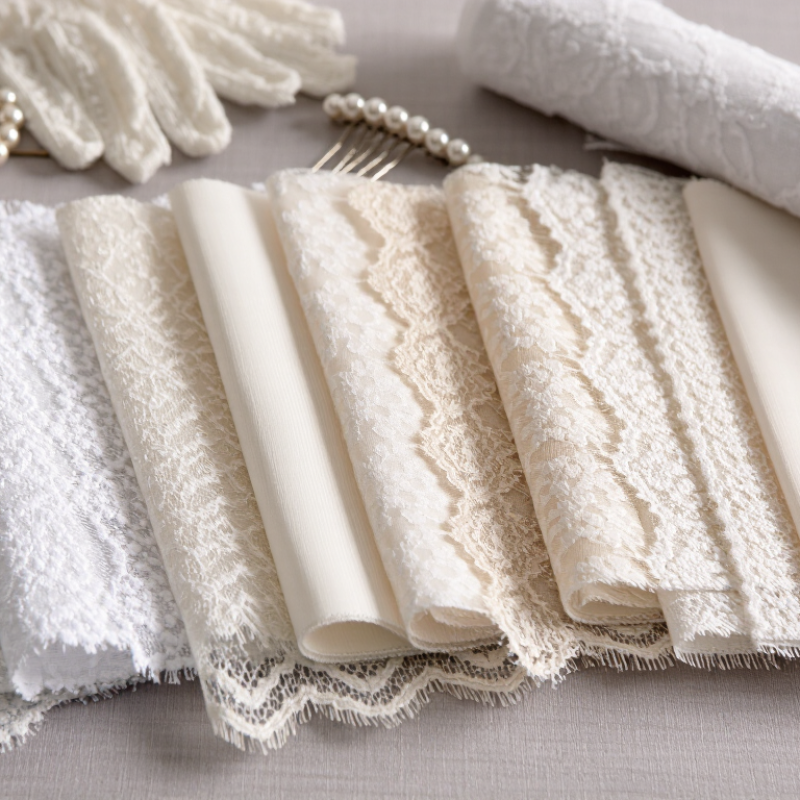
Lace fabric combines an open structure with decorative motifs, making it useful for global sourcing. Its ground may be knitted, woven, embroidered, or chemically formed. The construction affects softness, stretch, transparency, and durability. A floral lace with raised cords feels different from fine geometric mesh. Small structural choices matter.
Common fibers include cotton, polyester, nylon, rayon, and elastane blends. Cotton offers a natural hand feel, but it may shrink after washing. Polyester usually provides better dimensional stability and color consistency. Nylon creates strong, lightweight lace with useful stretch.
Fiber selection should match the product’s end use, climate, and care method. A supplier’s composition statement should be checked through independent testing when accuracy is important.
Patterns range from florals and leaves to grids, dots, and scalloped edges. Apparel makers often use lace for sleeves, panels, collars, and overlays. Home textile producers may select wider designs for curtains, table accents, or decorative covers.
During sourcing, I examine the selvage, motif alignment, hole size, fabric width, and recovery after stretching. I also request wash, shrinkage, colorfastness, and abrasion results. A swatch can look perfect under showroom lighting. It may behave poorly after washing. That is the part buyers sometimes underestimate. Regional labeling rules and testing expectations can also differ, so technical documents need careful review.

Why Choose Lace Fabric for Global Sourcing?
Fiber selection shapes lace performance, pricing, and supply stability. Polyester represented 57% of global fiber output in 2022, according to widely cited industry statistics. That scale matters to international buyers. It supports broad mill capacity, steady raw material access, and competitive production costs.
Polyester lace can retain its shape after repeated washing. It also dries quickly and resists many everyday wrinkles. These qualities suit apparel trims, lingerie panels, home textiles, and decorative packaging. During supplier reviews, buyers should inspect stretch recovery, edge curling, shade consistency, and tear strength. A sample may look elegant under showroom lights but feel rough against skin. Small details matter.
Request fabric swatches before approving bulk production. Compare them under daylight and indoor lighting. Ask for fiber composition, weight, width, dyeing information, and testing records. Polyester is not automatically the best option. Some buyers overlook breathability, static buildup, or the environmental impact of synthetic fibers. That assumption can be wrong. Recycled polyester may improve material efficiency, but its quality and traceability require verification. Production dates, color tolerances, and packaging conditions also deserve written confirmation.
Cost is only one part of the decision. A slightly cheaper lace can create waste if its pattern shifts across the roll. It can also cause delays when color matching fails. Careful sampling remains practical, even when deadlines feel tight.
Fiber Selection: Polyester Represented 57% of Global Output in 2022
Polyester accounted for the largest share of global fiber production in 2022. Its wide availability, durability, lightweight structure, and compatibility with decorative finishing make it a practical fiber for lace and other fashion-textile applications. Data are based on global fiber production estimates reported by Textile Exchange.
Lace sourcing needs more than visual appeal. Buyers should verify abrasion and laundering performance before approving bulk production. ISO 12947 uses the Martindale method to measure surface wear through repeated rubbing. It does not create one universal pass mark. End-use matters. A delicate trim needs different expectations from a lace panel on daily clothing.
AATCC 61 evaluates colorfastness and dimensional stability under accelerated laundering conditions. Some test settings approximate multiple home washes, but laboratories must report the exact method used. This detail is often missed. WRAP’s Valuing Our Clothes report found that extending clothing life by nine months can reduce carbon, water, and waste footprints by 20–30 percent. Durable lace can support that goal, although construction and care still influence results. Textile Exchange reported global fiber production at about 132 million tonnes in 2022, showing why longer product life deserves stronger sourcing attention.
Tips: Request ISO 12947 cycle results and AATCC 61 wash data from the same lace lot. Test scalloped edges, embroidery points, and seam areas separately. Photograph damage after each interval. Compare dry and wet samples. Do not treat a high abrasion number as proof of overall quality. A lace may resist rubbing yet shrink visibly after washing. That is where testing becomes useful, and imperfect assumptions become visible.
Global sourcing lace fabric requires more than comparing the lowest quotation.
Cost can change with fiber content, pattern complexity, embroidery density, and finishing requirements. A narrow floral lace may use less yarn, yet its detailed edging can increase labor costs. I compare quoted prices with sample specifications, not numbers alone. Small differences matter.
Capacity affects reliability.
A supplier producing lace on several machines can handle repeat orders more steadily. However, available capacity may shrink during seasonal demand. I ask for machine allocation, monthly output, and recent production records. Samples reveal surprises. A beautiful sample does not prove stable bulk quality.
Lead times should include sampling, material approval, production, inspection, and shipping.
A factory may promise 25 production days, while approvals add another week. That gap matters. Compliance also needs documented attention. I request fiber-content records, chemical test reports, workplace policies, and traceability documents. Requirements differ across markets, so current buyer standards and local regulations must be checked. I have seen teams focus on price and overlook testing costs. That mistake can delay delivery. Lace sourcing is not perfectly predictable, and forecasts can be wrong, especially when colors or trims change late. Careful records, realistic buffers, and direct factory communication make decisions more dependable.
Why Choose Lace Fabric for Global Sourcing?
Lace fabric can support lighter, more detailed products with less material use. Yet it is not automatically sustainable. The United Nations Environment Programme estimates that textiles create 2–8% of global greenhouse gas emissions. This figure includes fiber production, dyeing, manufacturing, transport, and disposal. Lace sourcing therefore requires evidence, not attractive environmental language. The European Environment Agency reports that textile consumption in Europe causes about 270 kilograms of carbon emissions per person annually. Choosing recycled, organic, or responsibly produced fibers may reduce impacts, but processing still matters.
Tips: Ask suppliers for fiber content, energy data, water records, and wastewater controls. Check production locations and audit dates. Request test reports for colorfastness and durability. Durable lace can reduce replacement frequency. However, recycled content alone does not prove lower total emissions.
A practical sourcing review should compare fabric weight, yield, packaging, transport distance, and expected product life. Digital sampling can also reduce repeated physical samples and shipping. The Sustainable Apparel Coalition’s industry tools encourage impact measurement across materials and manufacturing stages. Still, textile data remains inconsistent between suppliers. That is a problem worth admitting. Buyers should record assumptions and improve them over time. Small details matter, such as a 30-meter trial order, low-impact dyeing, and recyclable packaging. Reliable sourcing depends on transparent records, independent verification, and realistic environmental claims.
| Sustainability Dimension | Verified Data | Why It Matters for Lace Sourcing | Practical Sourcing Focus |
|---|---|---|---|
| Global greenhouse-gas emissions | The textile value chain is estimated to generate approximately 2–8% of global greenhouse-gas emissions. | Material selection, production efficiency and product longevity can influence the overall environmental footprint of lace products. | Request fiber composition, production-energy information and credible environmental documentation from suppliers. |
| Freshwater use | The global textile and fashion sector uses an estimated 93 billion cubic metres of water per year. | Dyeing, finishing and fiber production may create substantial water impacts, especially in water-stressed regions. | Prioritize suppliers with wastewater treatment, water-use monitoring and lower-impact dyeing or finishing processes. |
| Synthetic microfiber release | Synthetic textiles are estimated to contribute approximately 35% of primary microplastics entering the oceans. | Synthetic lace may release fibers during washing, depending on yarn type, fabric construction and finishing quality. | Evaluate low-shedding yarns, fabric stability, washing guidance and supplier testing for fiber release where relevant. |
| Product utilization | The average number of times a garment is worn has decreased by approximately 36% compared with 15 years earlier. | Longer-lasting lace trims and garments can distribute production impacts across more uses. | Specify abrasion resistance, colorfastness, dimensional stability and secure edge construction. |
| Extending product life | Extending the active life of clothing by an additional 9 months can reduce carbon, water and waste footprints by approximately 20–30%. | Durable lace can support longer product use and reduce the need for premature replacement. | Use performance specifications, reinforced attachment points and care instructions suitable for repeated laundering. |
| Textile waste | The equivalent of approximately one garbage truck of textiles is landfilled or incinerated every second worldwide. | Lace products designed for durability, repair and material recovery can help reduce avoidable waste. | Avoid unnecessary blended constructions where possible, reduce cutting waste and plan take-back or recycling pathways. |
| Material efficiency | Lace is commonly used as a targeted trim, panel or overlay rather than as a full-width base material; its actual material efficiency depends on design and cutting layout. | Using lace selectively may reduce the quantity of base fabric required for decorative effects, but production waste still needs to be measured. | Request marker-efficiency data, cutting-loss estimates and sample approval before bulk production. |
| Responsible global sourcing | Environmental performance varies by fiber, dye, finishing process, energy source, transport mode and product lifespan; no single lace construction is automatically sustainable. | A transparent, data-based sourcing process prevents unsupported sustainability claims. | Compare suppliers using traceability, verified certifications, chemical management, wastewater controls and measurable performance criteria. |