inquiry
Leave Your Message

Top 10 Woven Wear Manufacturers in China for Global Buyers?

Global buyers evaluating Woven Wear manufacturers need more than attractive samples. Fabric hand-feel, seam consistency, shrinkage control, and dependable lead times all matter. Textile Exchange’s Materials Market Report 2024 estimates that global fiber production reached 124 million tonnes in 2023. McKinsey and The Business of Fashion’s State of Fashion 2025 report projects modest fashion-industry growth of 2% to 4% that year. These figures describe broader markets, not woven garments alone, but they show the scale and pressure shaping sourcing decisions.

China offers buyers a wide manufacturing base, from fabric mills to garment factories. Yet capacity claims do not prove consistent quality. Ask how suppliers manage fabric inspection, grading, production samples, and shipment scheduling. Request clear specifications, test records, and recent references where available. A crisp cotton shirt may look excellent in a sample room, then vary across bulk production. Details matter. Fashion designer and climate activist Vivienne Westwood’s advice remains relevant: “Buy less, choose well, make it last.”

This guide introduces ten Chinese manufacturers for international buyers to assess. It considers product focus, production capabilities, communication, and evidence that buyers can verify. No shortlist is perfect. Public information can be incomplete, and factory performance may change with orders, materials, and season. Treat each profile as a starting point, then confirm details directly before making a sourcing decision. The right partner is not simply the one with the lowest quote; it is the one whose process matches your product, standards, and delivery needs.
Top 10 Woven Wear Manufacturers in China for Global Buyers?

Understanding China's Woven Wear Manufacturing Industry

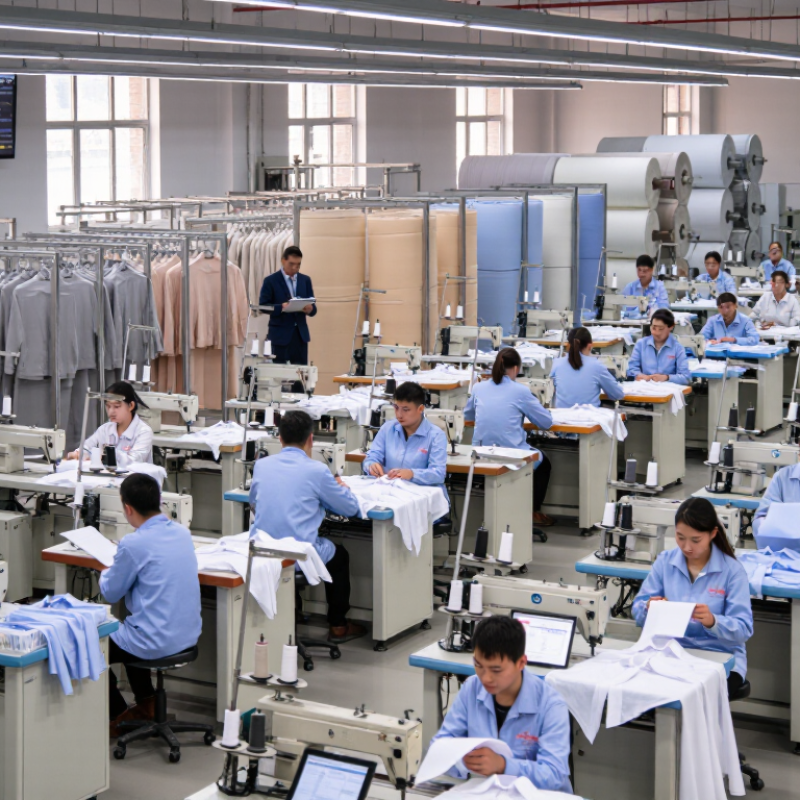
China’s woven wear manufacturing industry serves buyers through a wide range of factories, from small workshops to large export facilities. A useful Top 10 list should not rely on factory size alone. It should assess fabric knowledge, sewing accuracy, production capacity, quality control, and delivery history. Experienced manufacturers can handle cotton shirts, linen trousers, uniforms, and lightweight outerwear with consistent results.

A reliable factory should provide clear samples, measurable specifications, and traceable production records. Buyers should inspect stitching density, seam strength, shrinkage, colorfastness, and pressing quality.

Factory audits also matter. Check worker safety, environmental procedures, and documented compliance with destination-market requirements. A low quote may look attractive, but hidden rework costs can change the real price. No factory is perfect. Even strong suppliers may misjudge fabric behavior during the first sample round.

Tips: Request a pre-production sample and a fabric test report. Confirm minimum order quantities, lead times, inspection stages, and packaging details in writing. Ask how the factory handles rejected pieces. Small details reveal operational maturity. Avoid ranking suppliers only by online presentation. Visit when practical, or use an independent inspection service. A careful buyer should compare at least three factories before choosing a long-term partner. Mistakes still happen, especially with new fabrics, so leave time for corrections.

Key Criteria for Evaluating Chinese Woven Wear Manufacturers

Evaluating Chinese woven wear manufacturers requires more than checking product photos. In practical sourcing work, factory floors reveal important details. Inspect cutting tables, stitching lines, pressing stations, and finished-goods storage. Clean work areas usually support better consistency, but appearances can mislead. Ask whether the factory owns its equipment or relies heavily on subcontractors. Confirm production capacity against your seasonal order plan.

Request fabric specifications before approving samples. Check fiber content, fabric weight, shrinkage, colorfastness, seam strength, and surface appearance. A reliable manufacturer should provide test records and explain testing methods clearly. Compare the first sample with the approved measurement chart. Small differences in sleeve length or collar width can affect an entire shipment. A perfect sample is not proof of stable production. That assumption needs caution.

Evaluate communication through real production questions. Can the team explain lead times, minimum order quantities, fabric sourcing, inspection points, and correction procedures? Ask for a documented quality-control process, not only verbal promises. Review packing details, carton labeling, needle-control practices, and final inspection reports. Independent audits may add confidence, especially for new suppliers. Still, audits are snapshots. Regular inspections provide stronger evidence. Payment terms, export experience, and response speed also matter. One overlooked weakness can outweigh an attractive quotation.

Top 10 Woven Wear Manufacturers in China for Global Buyers? - Key Criteria for Evaluating Chinese Woven Wear Manufacturers

Use this scorecard to compare suppliers based on documented capabilities. It is an evaluation framework, not a ranking of named manufacturers; verify all claims directly with each supplier.

No. Evaluation criterion Weight Evidence to request How to assess Score (1–5)
1 Woven-garment specialization 15% Recent product examples, relevant production lines, and experience with comparable garment construction. Check experience with the buyer’s categories, such as shirts, trousers, dresses, jackets, or uniforms; distinguish in-house production from subcontracting. _____
2 Quality management and inspection 15% Written inspection procedures, sample inspection records, defect classifications, and corrective-action examples. Confirm how fabric, cut panels, sewing, measurements, and finished goods are checked against the buyer’s specifications and approved sample. _____
3 Fabric sourcing and traceability 10% Fabric mill details, composition information, test reports where relevant, and purchase or lot-tracking records. Verify that the proposed fabric matches the required fiber content, weight, construction, color, and finishing; ask how production lots are identified. _____
4 Sampling and product development 10% Sample workflow, sample timelines, pattern and grading capabilities, and records of sample revisions. Assess how accurately the supplier interprets tech packs, measurement charts, construction details, and fit comments. _____
5 Production capacity and planning 10% Relevant line capacity, current production loading, workflow description, and a proposed production schedule. Compare the supplier’s confirmed capacity and available production window with the order quantity and required ship date. _____
6 Social and regulatory compliance 10% Current audit reports or certifications, facility details, and policies relevant to the buyer’s market and code of conduct. Check scope, facility identity, validity dates, and whether subcontracting is disclosed. Confirm applicable product and chemical requirements for the destination market. _____
7 Export and documentation capability 10% Examples of export paperwork handled, shipping coordination process, and experience with the buyer’s destination markets. Confirm the supplier can coordinate required commercial and shipping documents and clearly state Incoterms® and shipment responsibilities. _____
8 Minimum order quantities and flexibility 7% MOQ by style, color, and fabric; size-range requirements; and any surcharges for smaller runs. Compare quoted minimums and flexibility with the order plan, including the number of styles, colors, and sizes. _____
9 Cost transparency and payment terms 7% Itemized quotation covering garment, fabric, trims, sampling, packaging, and any stated surcharges. Compare like-for-like specifications and clarify currency, quotation validity, payment milestones, and costs excluded from the quote. _____
10 Communication and issue resolution 6% Named contact, response process, production-update format, and examples of how issues are documented and resolved. Assess clarity, responsiveness, and willingness to confirm specifications, changes, risks, and corrective actions in writing. _____
Total weighting 100% Optional weighted score: add each criterion’s score (1–5) multiplied by its weight.

Suggested rating scale: 1 = insufficient evidence; 2 = significant gaps; 3 = meets basic requirements; 4 = strong, documented capability; 5 = independently verified and highly suitable.

Top 10 Woven Wear Manufacturers in China for Global Buyers

Top 10 Woven Wear Manufacturers in China for Global Buyers

China’s woven wear sector serves retailers, uniform suppliers, and private-label clothing companies worldwide. The top ten manufacturers should be judged by more than factory size. Production experience, fabric control, sampling speed, and communication matter equally. Many facilities produce shirts, dresses, trousers, jackets, and workwear in cotton, linen blends, polyester, and recycled fabrics.

A reliable manufacturer should show recent production samples, clear quality procedures, and traceable material records. Buyers should ask about pattern making, grading, cutting accuracy, stitching strength, pressing, and final inspection. A capable sample room can reveal practical expertise early. So can a factory visit or independent audit. Check minimum order quantities, payment terms, lead times, and packaging details before signing. Small details become expensive problems later.

No ranking is perfect. A factory with advanced equipment may still struggle with urgent changes or smaller orders. Another may offer flexible development but lack strong export documentation. Request a size set, wash test, color standard, and pre-production sample. Review measurements under natural light. It sounds simple, but rushed approvals often create uneven hems, shade differences, or weak buttons. Global buyers should compare at least three quotations and keep written specifications for every style. Trust grows from evidence, not confident promises.

Comparing Product Ranges, Production Capacity, and Export Services

China remains a major sourcing base for woven shirts, trousers, jackets, uniforms, and workwear. The WTO’s World Trade Statistical Review 2023 reported that China supplied 31.7% of global clothing exports in 2022. This scale gives global buyers broad product choices, from lightweight poplin to heavy cotton twill. However, product range does not prove manufacturing depth. Buyers should request fabric specifications, sample approval records, monthly output, and equipment details.

Production capacity needs practical testing. A factory may advertise 100,000 pieces monthly, yet reserve capacity can shrink during peak seasons. The 2023 China Textile and Apparel Export Report recorded combined exports of about US$293.6 billion, showing strong industrial reach. Still, national data cannot confirm one factory’s performance. Ask for recent production schedules. Check cutting, sewing, inspection, and packing separately. Small details matter.

Export services often separate reliable suppliers from merely capable workshops. Confirm Incoterms, carton measurements, inspection procedures, labeling control, and document accuracy. The International Trade Centre stresses transparent trade data and market compliance in its Trade Map methodology. Buyers should also verify fiber content and origin claims before shipment. Keep records. Do not rely only on polished samples. A spreadsheet can still mislead. My imperfect view: capacity, quality, and export support should receive equal scoring, although many comparisons overweight price and product photos.

Sourcing, Quality Control, and Compliance Considerations for Buyers

Chinese woven-wear suppliers can offer strong capacity, but price alone is a weak sourcing signal. Textile Exchange’s Materials Market Report 2024 estimates global fiber production reached 132 million tonnes in 2023. Polyester represented about 57% of output. Buyers should therefore verify fiber declarations, recycled-content claims, and batch traceability before approving bulk production.

Quality control works best when it starts with a measurable specification sheet. Check fabric weight, shrinkage, colorfastness, seam strength, and dimensional stability. A pre-production sample should match the approved fabric lot, not only the design sketch. During cutting, inspect roll defects under consistent lighting. During final inspection, use an agreed sampling plan and record defects with photographs. Small gaps matter.

Compliance requires more than collecting certificates. Ask for current test reports, factory licenses, subcontractor records, and chemical management procedures. The OECD Due Diligence Guidance for Responsible Supply Chains in the Garment and Footwear Sector recommends risk-based supplier assessment and corrective action tracking. Third-party audits help, but they are not perfect. A clean audit can still miss excessive overtime or unapproved subcontracting. Buyers should interview workers privately, review payroll evidence, and repeat checks after corrective actions. WRAP’s Valuing Our Clothes research found that extending garment life by nine months can reduce carbon, water, and waste footprints by around 20–30%. Better construction is compliance support, not just a design choice.

Top 10 Woven Wear Manufacturers in China for Global Buyers

Sourcing, Quality Control, and Compliance Considerations for Buyers

The chart presents a practical buyer evaluation framework for comparing woven-wear suppliers without ranking or disclosing individual company data. Product quality, factory capability, and regulatory compliance receive the highest weighting because they directly influence shipment consistency, customer safety, and market access. Buyers should validate each supplier through factory audits, production samples, inspection records, social-compliance assessments, and applicable chemical or product-safety documentation.