inquiry
Leave Your Message

Why Choose Formal Shirts for Your Business?

A business wardrobe is often judged in the small details: a clean collar, sleeves that end near the wrist, and a shirt that stays comfortable through a long meeting. Formal Shirts can help employees look prepared and consistent without making their clothing the focus. That matters when greeting clients, presenting figures, or joining a video call. The right choice is not always the most expensive one. Fit comes first.

“Dressing well is a form of good manners,” fashion designer Tom Ford has said. His observation offers a useful lens for business clothing: appearance can signal consideration for colleagues and customers. A well-fitting shirt in breathable cotton, for example, can feel more appropriate in a warm office than a stiff, heavy fabric. Pale blue and white are practical starting points. They pair easily with suits and trousers, and they show marks quickly. A small downside.

Choosing shirts for a business also involves everyday realities. Consider the dress expectations of your workplace, the climate, laundry routines, and the range of body shapes on your team. Clear size guidance and consistent colors can make purchasing simpler, though one style will never suit everyone. A collar that looks sharp on a product page may feel tight by lunchtime. That detail is easy to overlook. This guide explores how Formal Shirts can support a polished business image, what to check before buying, and where practicality should matter more than trend. A shirt helps, but it cannot replace good work.

Why Choose Formal Shirts for Your Business?

What Defines a Formal Shirt in a Business Setting?

In a business setting, a formal shirt is defined by a neat, restrained appearance and a fit that works under a jacket. It usually has a structured collar, a clean front, and long sleeves with buttoned cuffs. White and pale blue are common choices because they pair easily with suits and trousers. Subtle stripes may also fit, depending on the workplace.

Small details matter. The collar should sit flat rather than curl beneath a lapel, and the cuffs should reach the wrist without covering the hand. A placket with discreet buttons looks composed without drawing attention. Fabric matters too: cotton or a cotton blend can feel breathable through a long workday, while a very thin fabric may show undershirt lines. A little texture is often fine; shine can feel out of place in a conservative office.

Fit is personal. A shirt that pulls across the chest or balloons at the waist can look untidy, even when its design is traditional. The shoulder seams should rest near the edge of the shoulders, and the hem should stay tucked during ordinary movement. “Formal” is not a fixed formula, though. Client meetings, office customs, and climate all affect what feels appropriate. A crisp shirt may still be uncomfortable, and comfort is sometimes overlooked. The best choice balances a polished look with room to sit, reach, and work.
How Formal Shirts Shape Professional First Impressions

Why Choose Formal Shirts for Your Business?

How Formal Shirts Shape Professional First Impressions

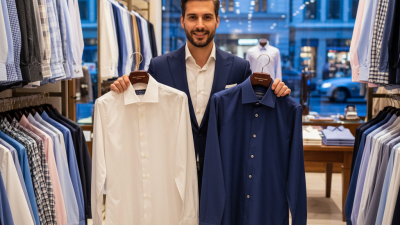
A formal shirt is often one of the first details people notice in a meeting. A crisp collar, clean cuffs, and a comfortable fit can suggest care and readiness. These details do not prove someone’s skills, of course. But they can make an introduction feel more considered.

Fit matters more than a dramatic style. A shoulder seam that sits correctly and sleeves that end near the wrist look composed without distracting from conversation. Pale blue or white fabric also works well in many office settings because it pairs easily with jackets and trousers. Small signals matter. Yet a shirt that pulls across the buttons may create the opposite impression, even when it is freshly pressed.

In everyday business settings, practical choices tend to hold up best. Choose breathable fabric for long days, and check how the shirt looks while seated, not just in a mirror. I used to think a sharper shirt could carry an entire first meeting; that was wishful thinking. Arriving prepared, listening closely, and speaking clearly matter more. A formal shirt supports those habits, but it cannot replace them.

How Formal Shirts Support Workplace Dress Standards

Formal shirts give employees a practical reference point for workplace dress standards. A clean collar, pressed cuffs, and consistent fit help teams look prepared without requiring identical outfits. This matters in client meetings, reception areas, and video calls, where small details can shape how professional a team appears. The standard should be clear, though. “Business formal” means different things to different people.

Research offers useful context. A 2015 peer-reviewed study by Slepian and colleagues, published in Social Psychological and Personality Science, tested the effects of formal clothing across three experiments. Participants wearing formal clothing showed more abstract thinking than those dressed casually. That finding does not prove a formal shirt improves job performance. It does suggest that clothing can influence how people feel and think at work.

A written dress guide can turn that insight into a fairer standard. It might specify collar styles, sleeve length, and when shirts should be tucked in, while allowing comfortable choices in color and fabric. Clear examples help more than vague rules. A breathable shirt may suit a warm commute; a spare shirt in a desk drawer can help after a rainy walk. Still, formal clothing is not a substitute for good work, and strict rules can feel arbitrary. Employers should review whether each expectation serves a real workplace need.

Why Choose Formal Shirts for Your Business?

How Formal Shirts Support Workplace Dress Standards

Formal shirts commonly feature structured collars, button-front closures, and cuffed sleeves—details that help create a polished, consistent workplace appearance. This chart is a descriptive checklist of typical shirt features, not survey data; specific styles vary.

Key Features That Affect Comfort and Durability

A formal shirt should feel comfortable after a full day, not just during a fitting. Look for a collar that sits without pressure and shoulder seams that align with your shoulders. A little room across the upper back helps when reaching for a laptop or writing at a desk. Cotton can feel soft and breathable, while a cotton-polyester blend may resist creasing. The actual result depends on weave, yarn, and finishing, so fiber content alone is not a comfort guarantee. Small details matter. Check whether buttons pull when you move, and whether cuffs leave marks after an hour.

Durability depends on fabric weight, seam construction, and care. Denser fabric may withstand frequent washing, but it can feel warm in a crowded office. Inspect the side seams and button stitching; loose threads are easy to miss on a new shirt. Textile Exchange’s 2024 Materials Market Report estimates that global fiber production reached 124 million tonnes in 2023, underscoring the scale of material choices. Yet scale does not prove that one shirt lasts longer. WRAP’s Valuing Our Clothes report estimated that extending a garment’s active life by nine months could cut its carbon, water, and waste footprints by 20–30 percent. Not always. A supposedly durable finish may still feel stiff, and repeated hot washing can shorten a shirt’s useful life. Choose fabric you can comfortably care for, then follow its care label.

How to Choose Formal Shirts for Your Business Needs

Choosing formal shirts starts with the work, not the fabric label. For client meetings, look for an opaque weave, a collar that stays neat beneath a jacket, and cuffs that show slightly past the sleeve. For long desk shifts, prioritize breathable fabric and room across the shoulders. Check measurements on a sample shirt: a collar should close without pressure, while the wearer can reach forward without pulling at the buttons. Small details matter. Loose threads and puckered seams can make a shirt look worn quickly.

Set a practical budget before ordering. The U.S. Bureau of Labor Statistics reported average annual spending of $1,945 per consumer unit on apparel and services in 2023; this covers many clothing categories, not shirts alone. Use it as broad context, not a shirt-price benchmark. Compare cost per expected wear, care requirements, and replacement needs. Ask suppliers for fabric composition, shrinkage guidance, and size charts, then wash and press one sample before committing. A crisp shirt that needs delicate care may be a poor fit for a busy team. There is no perfect option. A lighter fabric may crease; a heavier one may feel warm under office lights. Check staff feedback after a full day, not just during a fitting.

Why Choose Formal Shirts for Your Business? - How to Choose Formal Shirts for Your Business Needs

Selection Factor Options to Consider Practical Guidance Best Suited For
Fabric Cotton, cotton-blend, or linen blend Cotton is breathable and widely used for office shirts. A cotton-blend may wrinkle less and can be easier to care for. Linen blends feel airy but tend to show more creasing. Choose based on the work environment, climate, and preferred care routine.
Weave Poplin, twill, or Oxford Poplin has a smooth, lightweight feel; twill has a diagonal texture and often drapes more softly; Oxford cloth has a more visible basket-like texture. Poplin for a refined look, twill for regular office wear, and Oxford for a less formal business-casual setting.
Fit Regular, tailored, or relaxed A well-fitting shirt should allow comfortable movement across the shoulders and chest. Check that the collar closes comfortably and the sleeves reach the wrist when arms are relaxed. Select a fit that suits the wearer’s measurements and remains comfortable throughout the workday.
Collar Spread, point, or button-down Spread and point collars pair readily with business attire. Button-down collars have a more casual appearance and are typically worn without a tie. Match the collar to the organization’s dress code and whether ties are commonly worn.
Color White, light blue, pale neutrals, or approved accent colors White and light blue are versatile choices that coordinate with many business outfits. For a consistent team appearance, agree on a shared color palette. Client-facing roles, uniforms, and teams with a defined dress standard.
Sleeve and cuff Long sleeve with button cuff or convertible cuff Button cuffs are straightforward for everyday office wear. A convertible cuff can accommodate either buttons or cuff links, depending on its design. Choose according to the expected formality and the wearer’s preferred accessories.
Care requirements Machine-washable, easy-care, or special-care fabric Check the garment’s care label before washing or ironing. For a team wardrobe, care instructions that fit existing laundry routines can simplify upkeep. Businesses outfitting staff who need practical, repeat-wear clothing.
Ordering and consistency Size range, repeat availability, and color matching Collect measurements and confirm sizing with a sample before placing a larger order. Keep a record of approved colors, fabric details, and size selections for reorders. Organizations purchasing shirts for multiple employees or replacing items over time.