inquiry
Leave Your Message

How to Source Graphic Tees Wholesale in 2026?

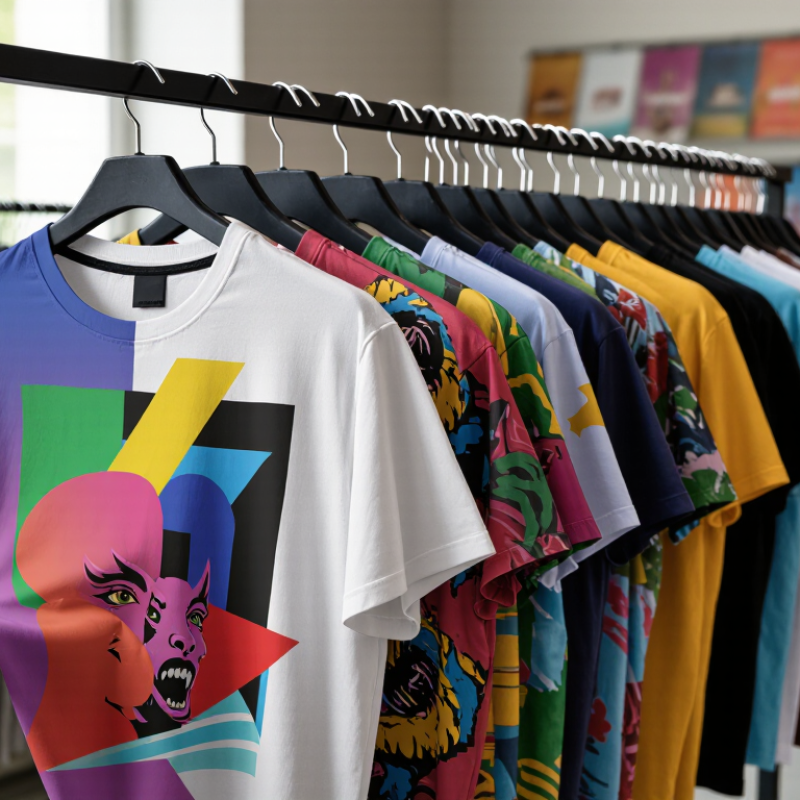
Sourcing Graphic Tees wholesale in 2026 requires more than finding a low unit price. Buyers must evaluate artwork originality, fabric weight, print durability, minimum order quantities, lead times, and supplier transparency. A shirt may look attractive online, yet feel thin under store lighting or crack after two washes. Small details become expensive quickly.

The opportunity remains substantial. Grand View Research valued the global custom T-shirt printing market at approximately $5.09 billion in 2023. Its report projects an 11.1% compound annual growth rate from 2024 to 2030. This category is not identical to Graphic Tees, but it provides a useful market signal. Demand is moving toward personalized designs, limited drops, and digitally printed collections. No forecast is perfect. That matters when inventory decisions involve cash and storage space.

Threadless co-founder Jake Nickell captured the community-driven nature of the category with a concise observation: “The community is the company.” His perspective remains relevant for wholesale buyers studying design demand, customer feedback, and emerging visual trends. Successful sourcing therefore combines supplier research with audience evidence. Review samples under natural light. Test stitching around the collar. Measure shrinkage after washing. Ask for production photos and documented quality standards.

This guide explains how to compare wholesale suppliers, verify ethical production claims, negotiate practical order terms, and reduce avoidable inventory risk. The process is not glamorous. Some promising designs will fail. Careful testing still gives Graphic Tees retailers a stronger, more defensible starting point.
How to Source Graphic Tees Wholesale in 2026?

Define the Opportunity: $4.3B Custom-Printing Market (GVR, 2023)

How to Source Graphic Tees Wholesale in 2026?

The opportunity is measurable. Grand View Research valued the global custom T-shirt printing market at approximately $4.3 billion in 2023. Its report also projects strong growth through 2030, supported by personalization, online retail, and short-run production. For wholesale buyers, this signals demand beyond basic blanks. Customers increasingly expect original graphics, softer fabrics, and limited designs that feel less mass-produced.

Demand alone does not guarantee profit. A sourcing review should compare cotton composition, fabric weight, print durability, size grading, and minimum order quantities. A 180–220 GSM shirt may suit everyday retail, while heavier fabric creates a more premium hand feel. Request physical samples. Inspect stitching around the collar, measure shrinkage after washing, and test artwork for cracking. Small details become expensive at scale.

The International Trade Centre highlights the importance of transparent trade data when assessing apparel supply chains. Buyers should verify production capacity, material documentation, workplace standards, and delivery records before placing deposits. Keep purchase terms clear, including defect allowances and inspection procedures. Mistakes happen. An attractive unit price can hide high rework costs, slow replenishment, or inconsistent sizing. Even experienced buyers can overestimate a trend. A smaller first order may protect cash flow while revealing real customer response. According to Grand View Research’s 2023 analysis, customization is the opportunity; disciplined sourcing determines whether that opportunity becomes repeatable revenue.

How to Source Graphic Tees Wholesale in 2026?

Define the opportunity: the global custom T-shirt printing market was valued at approximately $4.3 billion in 2022, with an estimated 11.1% compound annual growth rate from 2023 to 2030.

The values for 2023–2030 are calculated estimates using the reported 2022 market value of $4.31 billion and the published 11.1% CAGR. For wholesale sourcing in 2026, this implies a large and expanding demand pool for blank apparel, on-demand printing, small-batch production, and trend-led graphic designs.

Source: Grand View Research, Custom T-shirt Printing Market Report, 2023. Market-size projections are rounded.

Set Tee Specs: Compare 180–240 GSM, Fibers, Fits, and Print Methods

How to Source Graphic Tees Wholesale in 2026?

When sourcing graphic tees wholesale in 2026, start with measurable specifications, not attractive mockups. A 180 GSM shirt feels light and dries quickly, but may distort sooner under heavy printing. At 220–240 GSM, the fabric hangs better and withstands repeated handling. It also costs more and can feel warm in humid markets. That trade-off matters. Ask suppliers for finished-garment weight, not only fabric weight. Confirm shrinkage after washing, because a small length change can ruin a carefully placed graphic.

Fiber choice affects touch, durability, and print behavior. Combed, ring-spun cotton usually creates a smoother surface than basic carded cotton. Cotton-polyester blends can improve shape retention, while higher polyester content may suit moisture-focused products. Check the blend percentage on the specification sheet. Then review shoulder width, chest width, body length, and sleeve opening for each size. A relaxed fit needs different grading than a standard fit. Samples reveal problems. I would not approve production from one size alone.

Screen printing remains efficient for larger runs with limited colors. Direct-to-garment printing can handle detailed artwork, but fabric pretreatment and curing need close control. Transfer methods offer flexibility for smaller quantities, though thick designs may reduce softness. Request wash, stretch, and rubbing tests under documented conditions. Inspect cracks around seams and uneven ink coverage. No specification sheet is perfect; suppliers can miss tolerances, and buyers can overlook comfort while chasing a lower unit cost. Keep signed measurements, approved samples, and test results together before placing the order.

Find Suppliers: Screen MOQ, Capacity, and 11.1% CAGR (GVR, 2024–2030)

How to Source Graphic Tees Wholesale in 2026?

Wholesale graphic tee sourcing is becoming more competitive. Grand View Research projects an 11.1% CAGR from 2024 to 2030. This growth attracts new factories, brokers, and inconsistent suppliers. Screen each supplier beyond price. Ask for MOQ by design, color, size range, and fabric weight. A 300-piece MOQ may become 1,200 pieces after separate artwork and color requirements. Request production capacity for normal and peak months. Capacity should include cutting, sewing, printing, curing, packing, and quality inspection.

Tips: Order physical samples before negotiating volume. Check print alignment, ink softness, cracking after washing, seam strength, and measurement accuracy. Ask for a recent production timeline. A supplier with impressive machinery may still lack reliable planning. Confirm whether artwork approval, sample revisions, and defective replacements are included. Keep every specification in writing.

Capacity claims need evidence. Request anonymized production records, inspection photos, and a factory video showing active work areas. Do not rely on one sample. Test several sizes and colors because dark garments can reveal printing weaknesses. Consider a small pilot order before a larger commitment. It may cost more per piece. That cost can expose hidden delays early. I would also leave room for uncertainty. Forecasts can change, and an 11.1% CAGR is not a guarantee for every niche. A supplier should explain its limits clearly, not promise everything.

Audit Compliance: Check CPSIA, OEKO-TEX, GOTS, and Factory Traceability

Wholesale graphic tees in 2026 require more than attractive artwork and low unit prices. Audit compliance should guide every supplier conversation. Ask for CPSIA test reports, product tracking records, and children’s product documentation when applicable. Verify the report matches the exact fabric, ink, trims, and production facility.

OEKO-TEX documentation can help confirm tested materials and restricted substances. Check the certificate number, validity dates, product scope, and issuing body. GOTS requires more than organic fiber content. It also covers processing, chemical controls, and supply-chain integrity. A certificate covering cotton alone may not cover printing or sewing.

Factory traceability needs practical evidence. Request the factory address, subcontractor list, batch codes, purchase records, and shipment documents. Match a finished tee to its fabric roll and ink lot. Ask for recent audit findings, not only polished certificates. Missing records are warning signs.

Do not trust a spreadsheet alone.

A useful audit includes a sample inspection. Photograph neck labels, care labels, packaging, and carton marks. Keep test reports with purchase orders and production dates. I once treated a valid certificate as complete proof, but its scope excluded the final printing site. That mistake delayed approval and increased costs. Suppliers may also provide outdated files without realizing the risk. Recheck documents before every seasonal order, because factory processes and subcontractors can change.

Price the Order: Add Samples, Freight, Duties, and Wholesale Margin

When sourcing graphic tees wholesale in 2026, price the complete order, not only the unit quote. A supplier may offer a $5 tee, but the real cost begins with samples, freight, duties, and handling. I usually request two samples before approval. One checks fabric weight and print quality. The other tests sizing after washing. Sample costs and courier fees should be recorded separately, then allocated across the expected order quantity.

Freight can change the margin quickly. For example, a 300-piece shipment with $420 freight adds $1.40 per shirt. Duties depend on tariff classification, customs value, and the country of import. Verify the current rate with official customs guidance or a qualified broker. Do not estimate from an old spreadsheet. Rates and documentation requirements can change. Include brokerage, inspection, and domestic delivery fees when calculating landed cost.

Then set the wholesale price from the landed cost, not the factory price. If production costs $5, samples add $0.20, freight adds $1.40, and duties and clearance add $0.75, the landed cost reaches $7.35. A 40% gross margin requires a price near $12.25, using the formula: price = cost ÷ (1 − margin). Check payment fees, damaged units, and slow-moving sizes too. I once ignored rejected prints, and the margin looked healthy only on paper. That error was avoidable. Leave room for measured adjustments, but avoid padding the price without evidence.