How to Choose the Right Lace Fabric for Your Sewing Projects?
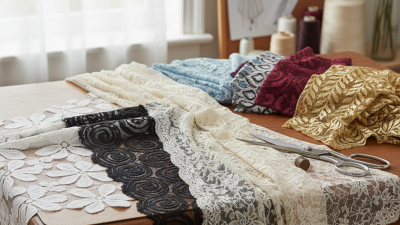
When selecting the right lace fabric for your sewing projects, several factors come into play. Renowned lace expert, Linda Morrison, emphasizes, “The perfect lace fabric transforms a simple design into a stunning masterpiece.” Choosing lace can be challenging due to its variety. Each type of lace offers a unique texture, pattern, and aesthetic.
Consider how the lace fabric drapes and behaves. Some laces are stiff, while others are soft and flowy. Reflect on your project needs, as not every lace suits every design. For instance, delicate laces work well for garments, while sturdier options suit home décor.
There’s also the color to think about. Lace fabrics come in numerous shades, but finding the right hue that complements your main fabric can be tricky. It's not just about the looks; the lace’s practicality matters too. Some fabrics may fray easily, while others require careful handling. Making these choices can feel overwhelming, yet they are essential for a finished project that shines.
Understanding Different Types of Lace Fabrics for Sewing Projects
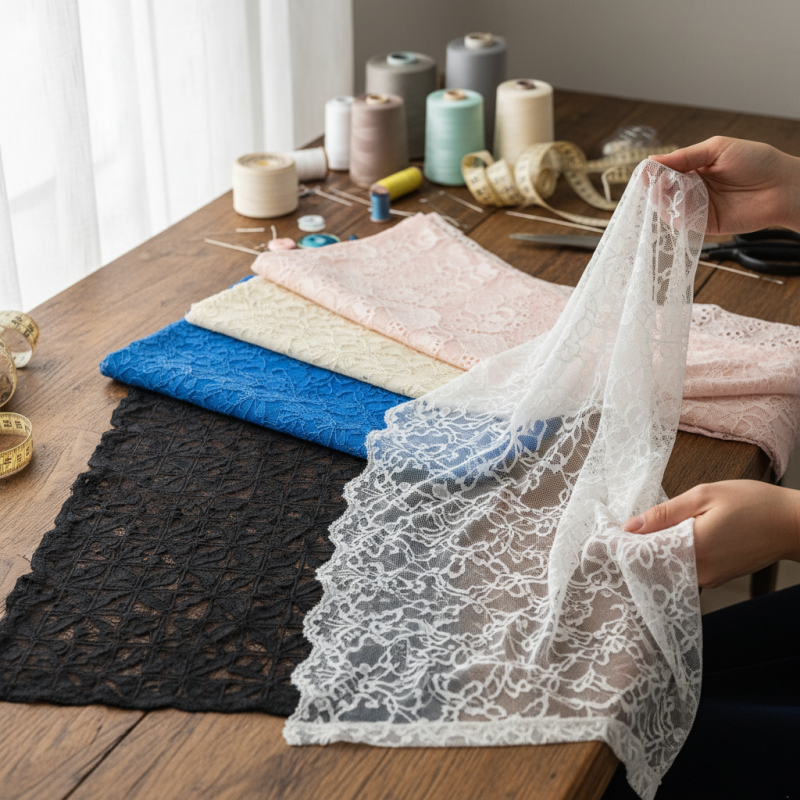
When choosing lace fabric for your sewing projects, it’s crucial to understand the different types available. Lace can vary not only in design but also in texture and weight. For example, Chantilly lace offers intricate floral patterns and a delicate feel. It’s popular for garments with a vintage flair. Conversely, Venetian lace is thicker and sturdier, often used for structured pieces or accents. Both types can elevate your project but require different handling techniques.
Recent industry reports indicate that lace fabrics are enjoying a resurgence in popularity. Statistics show that the demand for lace fabrics surged by 25% in the last year alone. Many hobbyists and professionals favor lace for its versatility. However, not all lace behaves the same way. Some may fray easily, while others are more resilient. Misjudging these qualities can lead to disappointing results. It’s wise to test the fabric beforehand to gauge how it will perform in your projects.
Additionally, consider the opacity of the lace. Some options may not provide adequate coverage. This lack of consideration can lead to uncomfortable or unflattering finished garments. Finding the right lace involves not just selecting a pretty pattern, but also contemplating how it will work within your design. Educating yourself on these intricacies can save time and resources in your sewing journey.
Types of Lace Fabrics for Sewing Projects
Key Factors to Consider When Choosing Lace Fabric
Choosing lace fabric for your sewing projects requires careful thought. The first factor to consider is the fabric’s weight. Light lace works well for delicate garments like blouses or skirts. Thicker lace can add structure to dresses or home decor. Pay attention to how the lace feels. Is it rough or soft against the skin? This matters, especially for clothing.
Next, consider the design of the lace. Floral patterns can evoke femininity, while geometric designs might suit modern styles better. Don't overlook color, either. Some laces come in vibrant hues, while others are neutral. Think about how the lace will coordinate with other fabrics in your project.
Lastly, reflect on the lace's functionality. Is it for casual wear or special occasions? Consider its durability. Some laces can fray or lose shape after washing. Choosing wisely is essential, but mistakes can be part of the process. Sometimes, you learn what works best through trial and error.
Assessing Fabric Quality: What to Look for in Lace
When choosing lace fabric, assessing its quality is crucial. High-quality lace should have a smooth texture. Examine the edges for any fraying. Flawed edges can ruin your project. A sturdy lace will hold its shape beautifully.
Tips: Always hold the fabric up to the light. Look for consistent patterns and colors. If it looks uneven, consider other options. Touch the lace. It should feel soft yet durable. Avoid overly stiff lace unless you want that effect.
Consider the weight of the fabric. Lightweight lace works well for delicate garments, while heavier lace suits structured pieces. Reflect on how the lace drapes. A poor drape may lead to frustration during sewing. Test the fabric by making a small sample piece. This step can save time and materials.
How to Choose the Right Lace Fabric for Your Sewing Projects? - Assessing Fabric Quality: What to Look for in Lace
| Fabric Type |
Quality Indicators |
Best Uses |
| Cotton Lace |
Soft texture, good breathability, durable |
Dresses, light curtains, crafts |
| Polyester Lace |
Affordable, colorfast, retains shape |
Bridal wear, overlays, costumes |
| Silk Lace |
Luxurious feel, delicate, lightweight |
Formal wear, evening gowns |
| Nylon Lace |
Strong, resistant to wrinkles, smooth |
Swimwear, activewear |
| Rayon Lace |
Soft, drapes well, retains color |
Blouses, summer dresses, home decor |
Matching Lace Fabric with Your Sewing Project Needs
Choosing the right lace fabric for your sewing project can be tricky. Lace fabrics come in various types, such as cotton, nylon, and polyester. Each type serves different purposes. According to a recent fabric industry report, cotton lace is popular for garments where breathability is essential, especially in summer.
When selecting lace, consider its weight and texture. Heavier lace can add structure to a garment, while lightweight lace is airy and delicate. It’s crucial to match the lace with the overall design. For instance, embroidery lace can enhance romantic styles, while geometric lace suits modern looks. Look around; sometimes, the wrong choice does detract from your vision.
Reflecting on past projects can be valuable too. Knowing which lace didn't work as expected helps refine your future selections. The fabric's flexibility is also essential; fabrics with stretch offer more comfort. Remember, not every lace will fit every project perfectly. Identify the best options through trial and error, and don’t hesitate to experiment.
Tips for Caring and Maintaining Lace Fabrics After Sewing
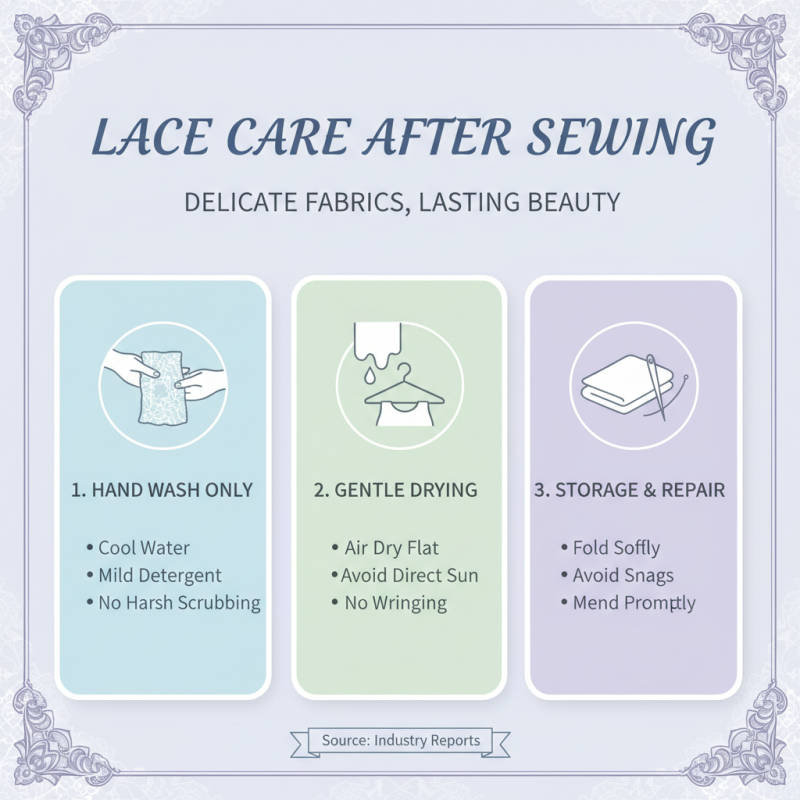
Caring for lace fabrics requires attention and diligence. Lace is delicate, yet beautiful, and it can easily be damaged if not handled properly. According to industry reports, improper washing is a leading cause of lace deterioration. Always hand-wash lace in cool water using a gentle detergent. Avoid vigorous scrubbing, as this can cause fraying or tears.
Storage is equally important. Lace should be stored flat or gently rolled to prevent creasing. Experts suggest using acid-free tissue paper for added protection. Heat can also be damaging; never expose lace to direct sunlight for extended periods. When ironing, use a low heat setting. A press cloth is advisable to protect the lace. Remember, not all lace can withstand the same care routine, so individual fabric types should be researched.
Even with the best care, lace can stain. Spills should be addressed immediately using cold water and a light touch. For stubborn stains, consult a professional cleaner, as they specialize in delicate fabrics. A report by the Textile Care Institute emphasizes that careful maintenance can extend the life of lace pieces significantly. Recognizing the need for proper treatment is crucial, as neglect can lead to irreversible damage.

 +86 15968093247
 CONTACT NUMBER
 CONTACT e-mail