How to Choose the Best T-Shirts for Your Business Needs?
Choosing the right T-Shirts for your business can be a game changer. As Mark Williams, a leading expert in the custom apparel industry, once stated, "Quality T-Shirts can elevate your brand identity." This highlights the importance of selection. T-Shirts are more than just clothing; they represent your brand and its values.
In today's competitive market, the decision-making process is not easy. Colors, fabrics, and fit all matter significantly. A well-chosen T-Shirt can enhance your visibility at events, helping customers recognize and remember your brand. However, many businesses overlook the importance of T-Shirt quality and style, leading to a misalignment between their branding goals and their products.
Reflecting on the details is essential. Think about your target audience. Are they looking for style or comfort? The right T-Shirts can create a connection with your customers. Conducting thorough research and seeking expert advice can lead to better choices. After all, a T-Shirt can tell a story—yours.
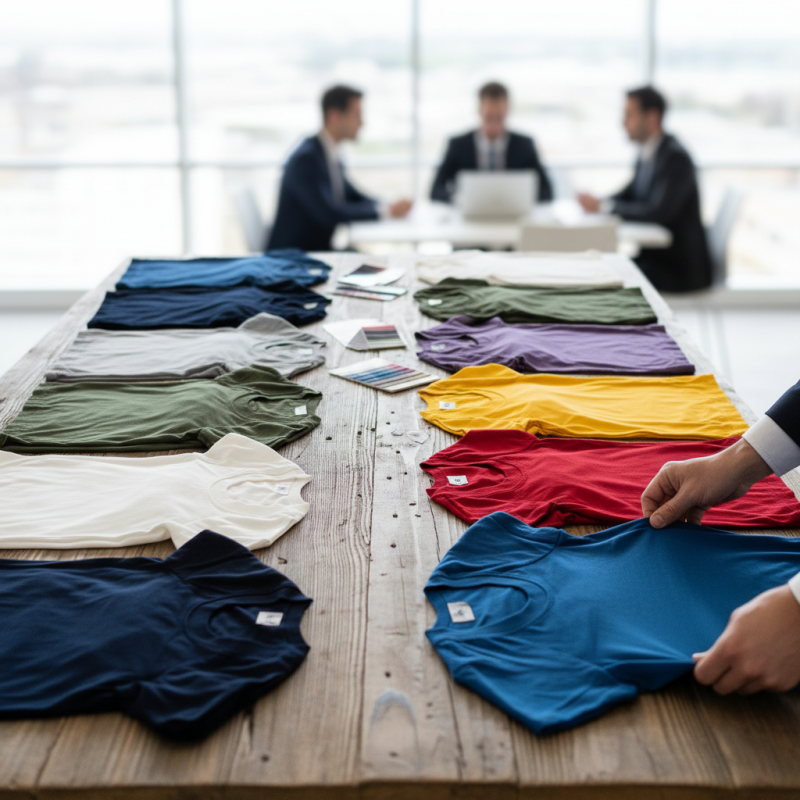
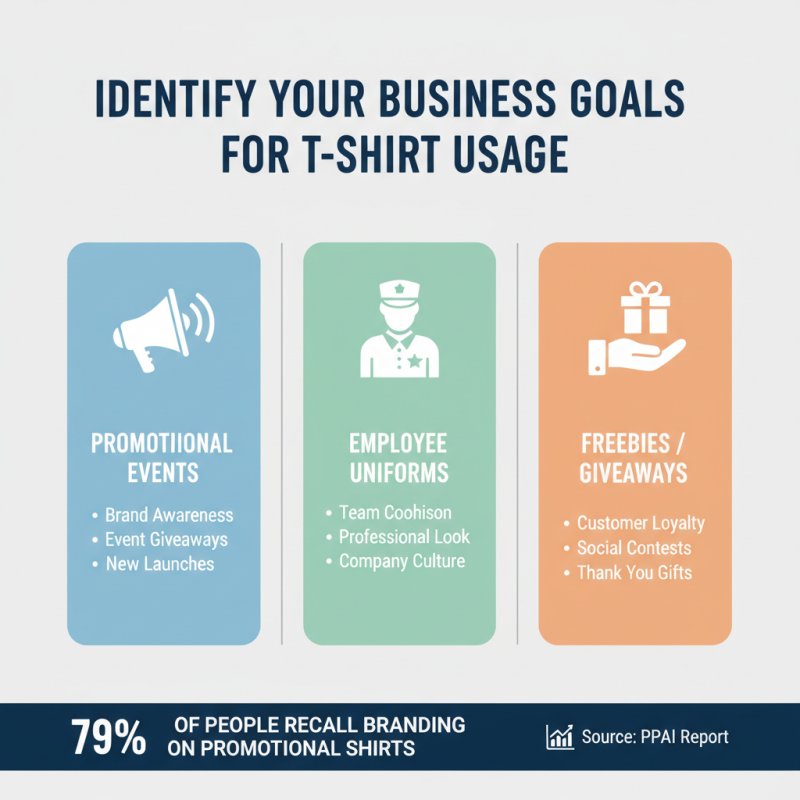
Identify Your Business Goals for T-Shirt Usage
When selecting t-shirts for your business, understanding your goals is crucial. Start by identifying the purpose behind the shirts. Are they for promotional events, employee uniforms, or giveaways? According to a report by the Promotional Products Association International, 79% of people can recall the branding on a promotional shirt. This statistic highlights the importance of aligning your t-shirt choice with your branding strategy.
One tip is to consider your target audience. Are you aiming for a youthful vibe or a more professional look? Your choice of fabric and design should reflect this. For example, cotton is breathable and versatile, making it suitable for casual settings. However, if brand image depends on sustainability, explore eco-friendly materials.
Another aspect is functionality. Think about the environment where your t-shirts will be worn. If they will be used in an active setting, durability is key. A survey from Statista found that 37% of consumers consider quality a primary factor in their purchasing decisions. Determine if you require moisture-wicking shirts or those with a relaxed fit. Balancing style and practicality is essential for achieving the best results.
Assess the Target Audience for Your T-Shirts
Understanding your target audience is crucial when selecting t-shirts for your business. Identify the demographics of your customers. Are they young adults, parents, or professionals? Knowing this helps tailor your designs and styles. For example, younger audiences may prefer trendy graphics, while professionals might favor classic, understated designs.
Consider the interests and values of your target population. Eco-friendly materials may appeal to environmentally-conscious consumers. Additionally, think about what themes resonate with them. Do they appreciate humor, or do they align with certain causes? Gathering feedback can be helpful. Engage potential customers in discussions about what types of t-shirts they desire. This reflects responsiveness to their preferences.
Testing different styles can reveal unexpected preferences. You might think bright colors will attract attention, but muted tones may resonate better with your audience. Stay open to evolution in tastes. A design that seems perfect today could become outdated over time. Observing trends and being willing to adapt is vital. Your approach should be a continuous learning process, not a fixed plan.
Select Fabric Types Based on Comfort and Durability
Selecting the right fabric for your business t-shirts is crucial. Comfort and durability play key roles. Different fabrics can affect how employees feel and how long the shirts last. Cotton is often a popular choice due to its breathability. However, it may not be the most durable option for all business environments.
Blends, like cotton-polyester, offer a balance of comfort and longevity. This type of fabric can withstand regular washing and daily wear. Yet, not every blend will feel soft. Some may feel scratchy, leading to discomfort. Conducting fabric tests is vital. It’s essential to consider how fabric reacts under stress.
Consider moisture-wicking fabrics for active environments. They keep wearers dry and comfortable. But those materials can be pricier. This could impact your overall budget. It’s necessary to weigh comfort against cost. Striking this balance requires careful thought and experimentation. Don’t hesitate to adjust your choices based on feedback from your team.
Evaluate Different Printing Methods for Design Quality
When choosing T-shirts for your business, considering the printing method is crucial. Different techniques can impact design quality and durability. Common methods include screen printing, direct-to-garment (DTG), and heat transfer. Each has its pros and cons regarding cost, detail, and longevity.
Screen printing is popular for bulk orders. It offers vibrant colors and sharp designs. However, it may not be cost-effective for small runs due to setup fees. DTG is excellent for complex images and small batches. It allows for intricate designs, but prints may fade faster over time. Heat transfer offers flexibility but can result in a plastic-like feel. Reflect on your priorities when deciding.
**Tips:** Focus on your target audience. Choose a printing method that aligns with their preferences. Test designs on different fabrics to gauge quality. Remember, imperfections can occur. Always ask for samples before committing to a large order. The right choice in printing can enhance your brand's image considerably.
Determine Budget and Quantity for Your T-Shirt Order
When determining the budget for your t-shirt order, start by assessing your business needs. Industry reports suggest that the average cost of custom t-shirts ranges from $5 to $20 per shirt, depending on style, material, and printing methods. For larger orders, the per-unit cost often decreases significantly. Businesses should calculate based on projected usage—will these shirts serve for events, employee uniforms, or promotional giveaways?
Next, consider the quantity. Reports show that ordering in bulk can reduce costs. For example, ordering 100 shirts might lower the price per shirt compared to ordering just 10. Yet, it's important to balance quantity with budget. Overestimating needs could lead to excess inventory, tying up resources. Conversely, ordering too few can lead to missed opportunities for visibility and promotion.
Flexibility in your order is crucial. Popular colors and styles can sell out quickly, affecting plans. Businesses should also think about future needs. Trends change. What works today may not work tomorrow. Test small batches first to gauge customer response before committing to larger quantities. This approach minimizes risk and helps in accurately refining your order strategy.
How to Choose the Best T-Shirts for Your Business Needs?
| T-Shirt Type |
Material |
Price (per unit) |
Quantity Available |
Best Use Case |
| Basic Cotton T-Shirt |
100% Cotton |
$5.00 |
500 |
Casual Wear, Events |
| Performance T-Shirt |
Polyester Blend |
$8.00 |
300 |
Sports, Training |
| Organic T-Shirt |
Organic Cotton |
$10.00 |
200 |
Eco-friendly Promotions |
| V-Neck T-Shirt |
Cotton/Polyester Blend |
$7.00 |
150 |
Fashion Events, Giveaways |
| Long Sleeve T-Shirt |
100% Cotton |
$12.00 |
100 |
Fall/Winter Promotions |

 +86 15968093247
 CONTACT NUMBER
 CONTACT e-mail