2026 Best Workout Clothes for Wholesale Buyers?
Wholesale buyers entering 2026 face a sharper question: which Workout Clothes deserve shelf space?
Demand remains strong, but growth is becoming more selective. McKinsey and the World Federation of the Sporting Goods Industry expect sporting goods growth to moderate through 2029. That shift rewards practical products, not loud promises.
Grand View Research continues to identify activewear as a major global apparel segment, supported by fitness participation, athleisure, and online retail. However, forecasts differ by region, product category, and research method. Buyers should treat market numbers as signals, not guarantees.
Material choices also require closer attention. Textile Exchange’s Materials Market Report 2024 reported polyester as the dominant global fiber, representing about 59% of total fiber production in 2023. This matters for wholesale decisions. A soft recycled-polyester legging may attract eco-conscious customers, but its recycled content, durability, and certification still need verification.
Real purchasing experience adds another lesson. A fabric can feel smooth under showroom lighting, yet fail after repeated washing. Waistbands may roll. Pale colors may become transparent during stretching. These details influence returns more than attractive product photography.
The best 2026 assortment should balance fit, function, price, and replenishment speed. Buyers need clear size charts, reliable color consistency, tested stitching, and realistic minimum order quantities. Supplier audits and sample testing remain essential.
No forecast is flawless. I would not select products from trend data alone. A smaller test order can reveal customer feedback, defect rates, and repeat demand before larger investment. This guide examines the strongest Workout Clothes options for wholesale buyers, using market evidence and practical evaluation criteria.
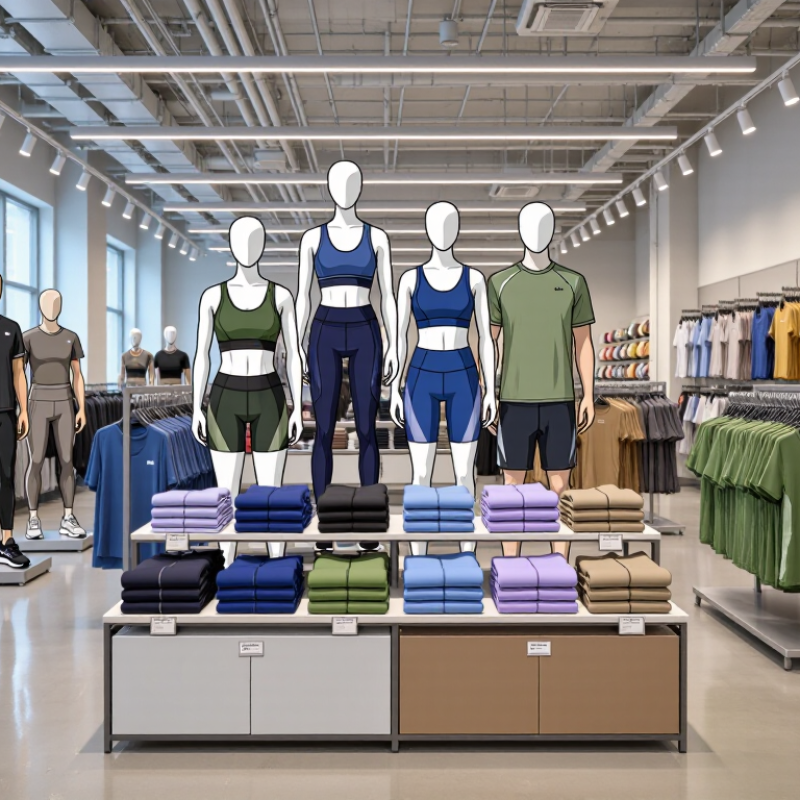
What Makes Workout Clothes Suitable for Wholesale Buying in 2026?
In 2026, wholesale workout clothes must solve practical problems, not only look fashionable. McKinsey’s Sporting Goods 2024 report forecasts approximately 5% annual industry growth through 2029. That growth increases competition for reliable, repeatable products. Buyers should examine fabric recovery, sweat management, opacity, and seam strength. A legging should survive repeated stretching without becoming transparent. A training top should dry quickly after a demanding indoor session.
Material responsibility also affects purchasing decisions. Textile Exchange’s Materials Market Report 2024 recorded global fiber production at about 124 million tonnes in 2023. Polyester represented roughly 57% of that volume. The report expects total production to approach 160 million tonnes by 2030. Wholesale buyers should request fiber composition, recycled-content evidence, colorfastness results, and supplier traceability. Certifications can help, but paperwork alone does not prove daily performance. Touch the fabric. Wash test it.
Commercial fit matters as much as technical quality. Useful wholesale programs offer stable sizing, clear minimum order quantities, practical delivery windows, and replacement options for defective units. Keep core colors controlled. Fashion colors can create excess inventory. I would not trust sales forecasts without checking local climate, gym habits, and customer price tolerance. A clean spreadsheet can still mislead. Buyers should test a small assortment first, measure return reasons, and review sell-through after several weeks. The best 2026 range may be less dramatic, but easier to reorder and easier to explain.
Which Fabrics and Performance Features Should Buyers Prioritize?
In 2026, wholesale buyers should judge workout clothing by fabric performance, not attractive photography. A practical blend of polyester and elastane offers stretch, shape retention, and efficient moisture movement. Nylon can provide a softer hand feel and stronger abrasion resistance, especially for leggings and training shorts. However, fabric choice depends on the activity. High-intensity garments need quick drying and airflow, while studio wear may require softness and controlled compression.
Look for four-way stretch, flat seams, secure waistbands, and durable stitching. These details affect comfort after repeated movement and washing. Breathable mesh panels can reduce heat around the back and underarms. A fabric weight around 160–220 GSM may balance coverage and ventilation, but it should match the garment design. Very light fabric feels cool. It may also become transparent or snag more easily. Test before ordering.
Buyers should request fabric composition, shrinkage data, colorfastness results, and independent performance reports. Sample garments need several wash cycles, stretching tests, and real movement trials. Check whether printed areas crack or whether waistbands roll during squats. Odor-control claims deserve careful review because performance can decline after washing. Recycled fibers may support sourcing goals, but they are not automatically more durable or comfortable. Fit still matters. A reliable supplier should explain testing limits, production tolerances, and replacement procedures clearly. Small details often reveal whether a product is ready for wholesale volume.
2026 Best Workout Clothes for Wholesale Buyers: Fabric & Performance Priorities
This benchmark compares commonly used activewear materials across key wholesale buying criteria. Polyester and nylon score strongly for moisture management and durability, elastane provides the highest stretch, and recycled polyester supports sustainability positioning. Blended fabrics are often the most practical choice because they balance comfort, recovery, performance, and cost.
How to Evaluate Suppliers, Product Quality, and Manufacturing Standards?
Wholesale buyers should evaluate workout-clothing suppliers beyond attractive samples. Textile Exchange’s Materials Market Report 2024 reports 124 million tonnes of global fiber production in 2023. Polyester represented about 57% of that volume, making fiber traceability important. Ask suppliers for fiber content records, recycled-material evidence, and production-lot documentation.
Test the fabric before discussing large quantities. Check GSM, four-way stretch, recovery after washing, colorfastness, pilling, sweat-wicking, and seam strength. A sample may feel excellent under showroom lights. It can still fail after repeated washing. Request test reports from an ISO/IEC 17025-accredited laboratory, and confirm the report matches the exact fabric composition. OEKO-TEX Standard 100 can support chemical-safety screening, but certification scope and expiry dates require verification.
Visit the factory when possible. Review cutting accuracy, needle control, inline inspections, measurement records, and final packing conditions. Ask for the supplier’s quality plan, acceptable quality limit, corrective-action process, and subcontracting disclosure. The International Labour Organization emphasizes responsible workplace practices across garment supply chains; buyers should examine worker-safety procedures and documented training. Certificates alone are not enough.
I distrust perfect samples.
Order a small pilot batch. Measure ten pieces from different cartons, then wash them independently. Compare shrinkage, logo placement, waistband tension, and stitch failures. My own mistake was trusting a polished sample without checking production consistency. Supplier scoring should include quality stability, communication speed, traceability, capacity, and realistic lead times—not price alone.
What Sustainability, Customization, and Market Trends Matter in 2026?
In 2026, wholesale buyers will judge workout clothes beyond color, price, and stretch. They will ask where fibers come from, how garments are made, and what happens after use. A practical sustainability check should include recycled content, certified materials, low-impact dyeing, and durable stitching. Request test reports, factory information, and clear care instructions before placing large orders. Eco-friendly alone proves very little. No material is perfect.
Customization will move beyond printed logos. Buyers may choose fabric weight, pocket placement, waistband height, labels, packaging, and size ranges. This flexibility helps studios, retailers, and teams serve distinct customers without creating unnecessary stock. However, excessive options can slow production and raise minimum order quantities. A sample is essential. Wear it during training, wash it repeatedly, and inspect seams after drying. In product testing, attractive samples sometimes hide uncomfortable waistbands or weak colorfastness. That small failure can become expensive inventory.
Market demand in 2026 is likely to favor versatile pieces for training, commuting, and daily wear. Breathable fabrics, inclusive sizing, modest coverage, and seasonless colors can support steadier sales. Buyers should also compare lead times, replenishment ability, and transparent pricing. Trend reports offer direction, not certainty. A responsible purchasing plan leaves room for correction when consumer preferences change. The best wholesale choice balances measurable impact, reliable performance, and realistic margins.

 +86 15968093247
 CONTACT NUMBER
 CONTACT e-mail